Overview
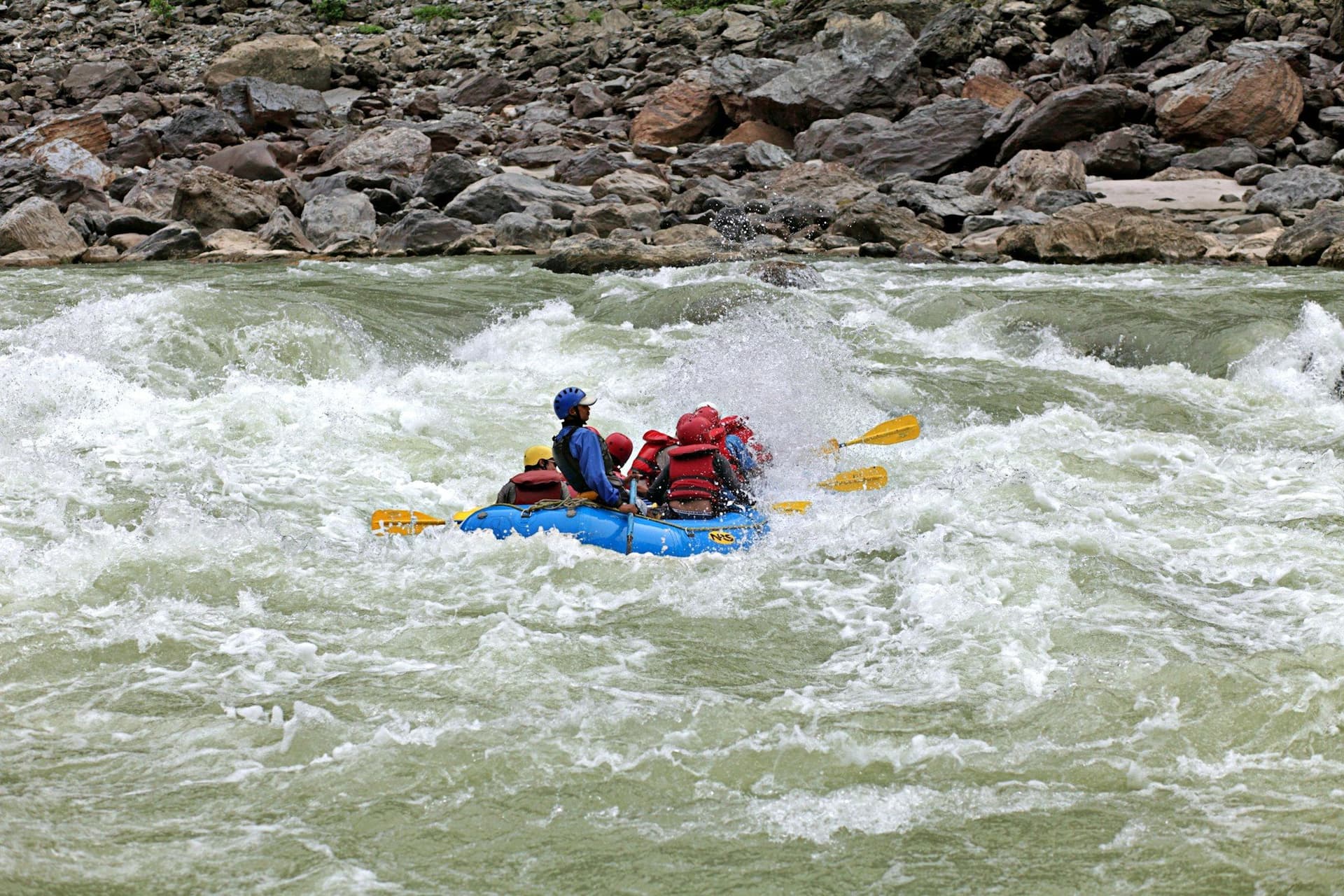
The Trishuli runs west out of the hills below Kathmandu and joins the highway to Pokhara, which is exactly why it is the river most visitors raft. You can be on the water three hours after breakfast in Kathmandu and off it in time for dinner in Pokhara two days later.
It is grade III — proper rapids, forgiving lines, warm water for most of the season. A first-timer can paddle it, and it is still a river rather than a float trip.
The two days
Day one is the busy one: the put-in at Charaudi, a safety briefing that is worth listening to, and about four hours through the main rapid sequence — Upset, Ladies' Delight, Surprise and Monsoon among them. Camp is a sand beach with no road access.
Day two is shorter and calmer, three hours through a widening valley to the take-out at Kurintar, below the Manakamana cable car.
What makes it worth two days
The one-day version is a highway stop. The overnight is the point: a beach with no traffic, a fire, and the river running past all night. It costs very little more.
Practicalities
Bring quick-dry clothes, river shoes or sandals with a heel strap, sunscreen and a change of clothes in a bag you hand to the vehicle. Everything else goes in the operator's dry barrels.
Check your insurance covers whitewater — a large number of standard travel policies exclude it.
Best season
September to early November for high, fast water after the monsoon. March to May for warmer, gentler conditions that suit families and nervous first-timers. Winter runs but wants a wetsuit.
Highlights
- Upset Rapid, Ladies' Delight and Surprise
- A night on a river beach, no road noise
- Grade III water that a first-timer can paddle
- Combines neatly with the Kathmandu–Pokhara road journey
Day by day
The full 2 days
Where you are, what you do, how you travel and where you sleep — each day a structured record rather than a paragraph.
- Day 1
Charaudi put-in to riverside camp
Trishuli River
- Safety briefing and paddle drill
- Roughly four hours on the water through the main rapid sequence
- Camp set-up on a river beach
- Transport
- Road from Kathmandu, 3 hours
- Sleep
- Beach camp, two-person tents
- Meals
- Lunch, dinner
- Time
- 4 hours on the water
- Day 2
Camp to Kurintar take-out
Trishuli River
- Three hours of easier water and open valley
- Take-out and change at Kurintar
- Transport
- Onward road to Pokhara or Chitwan
- Meals
- Breakfast, lunch
- Time
- 3 hours on the water
Map
Where this tour goes
Price
What $75–$180 covers
Two days including camp and all meals; the higher figure buys a better-equipped operator and private transport
Included
- Certified river guide and safety kayaker
- Helmet, buoyancy aid, paddle and wetsuit where needed
- Beach camp with tents and all meals
- Dry bags for personal kit
Not included
- Transport to the put-in and from the take-out
- Alcohol
- Personal travel insurance covering whitewater
Frequently asked questions
Do you need rafting experience?
Which season has the best water?
How does it compare with other Nepali rivers?
What about safety?
About the author
Tom Eriksen
Gear editor & photographer
Tom tests trekking equipment the only way that produces honest answers: by carrying it for weeks at a time above 4,000 metres. He shoots most of the photography on this site and writes the gear reviews, comparison tables and packing lists.
Writes about: Trekking gear · Photography · Packing and weight