Overview
Chitwan was Nepal's first national park, gazetted in 1973 on what had been a royal hunting reserve, and became a UNESCO World Heritage site in 1984. It sits in the lowland Terai on the Indian border — subtropical sal forest, elephant grass and river, 150 metres above sea level and a different country entirely from the mountains four hours north.
It is also the conservation success story Nepal is best known for. The one-horned rhino population fell to around a hundred by the mid-1960s; it is now above 690, and Nepal has recorded several consecutive years of zero rhino poaching.
What you actually see
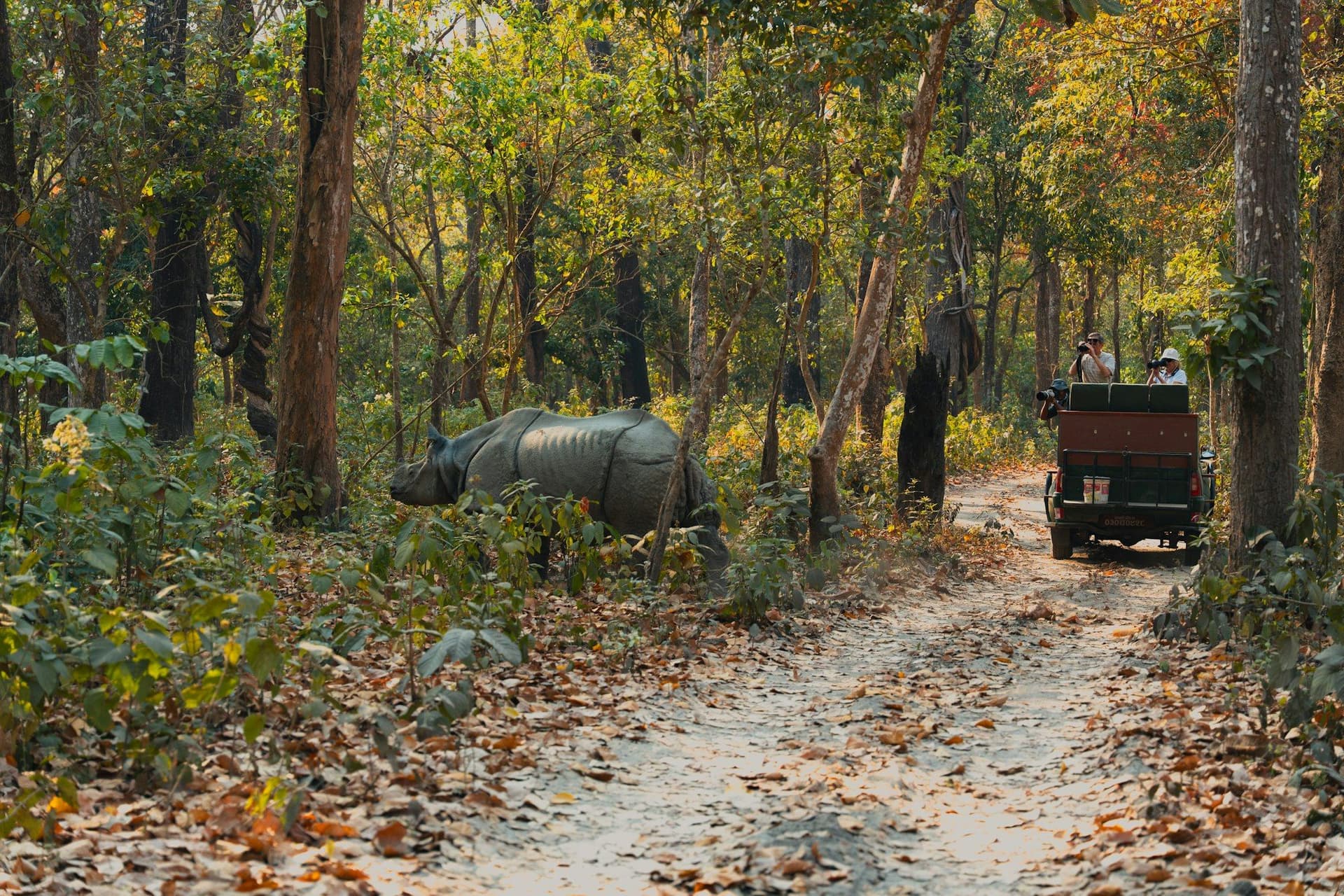
Rhino — routinely. They graze in the open, they wallow in the river, and on a good day you will see several.
Crocodile — gharial and mugger both, easiest from the canoe.
Birds — over 500 species recorded, including the Bengal florican and the giant hornbill. If you have any interest at all in birds, bring binoculars.
Tiger — rarely. Accept this before you go and everything else is a bonus.
Sloth bear, gaur, wild elephant, leopard — occasional, and a matter of luck.
Three ways in
The jeep safari covers ground and reaches the interior grasslands. The canoe on the Rapti is silent and gets you close to crocodiles and waterbirds. The guided walk is the one you will remember: on foot, in grass well above head height, with a naturalist and an armed escort.
Practicalities
Park entry is NPR 2,000 per person per day. Lodges range from simple guesthouses in Sauraha to serious buffer-zone lodges with naturalists on staff.
Bring long sleeves and trousers in neutral colours, insect repellent, and binoculars. Leeches are a monsoon problem only.
Best season
January to March is the best combination of cut grass, dry ground and mild weather. October to December is good with taller grass. April and May are hot but bring concentrated wildlife around shrinking water. The monsoon closes much of the park.
Highlights
- Greater one-horned rhinoceros, seen on most drives
- Gharial and mugger crocodile on the Rapti
- Guided walk in sal forest and elephant grass
- Over 500 recorded bird species
- Tharu stick dance and village walk
Day by day
The full 3 days
Where you are, what you do, how you travel and where you sleep — each day a structured record rather than a paragraph.
- Day 1
Arrival, riverside and Tharu evening
Sauraha
- Check in and park briefing
- Walk to the Rapti riverbank for sunset
- Tharu cultural programme
- Transport
- Road from Kathmandu or Pokhara, 5–6 hours
- Sleep
- Lodge, Sauraha
- Meals
- Lunch, dinner
- Time
- Afternoon and evening
- Day 2
Full-day jeep safari and canoe
Chitwan National Park
- Dugout canoe on the Rapti at first light
- Guided walk through sal forest
- Afternoon jeep safari deep into the park
- Gharial breeding centre
- Sleep
- Lodge, Sauraha
- Meals
- Breakfast, lunch, dinner
- Time
- 9 hours
The walk is the part where you see least and feel most. You go on foot, in grass taller than you are, with an armed escort. Rhino encounters on foot are handled by climbing a tree — this is explained beforehand, and it is not a joke.
- Day 3
Morning birdwatching and departure
Sauraha
- Dawn birdwatching walk in the community forest
- Elephant breeding centre
- Transport
- Road to Kathmandu or Pokhara
- Meals
- Breakfast
- Time
- 3 hours
Map
Where this tour goes
Price
What $220–$600 covers
Sauraha lodges at the low end; a buffer-zone lodge with all activities at the high end
Included
- Two nights' lodge accommodation with meals
- Park entry permits for the full stay
- Jeep safari, guided jungle walk and canoe trip
- Naturalist guide and armed park escort
- Tharu cultural evening
Not included
- Transport from Kathmandu or Pokhara
- Elephant-back rides, which we do not book on welfare grounds
- Drinks and tips
Frequently asked questions
What are the chances of seeing a tiger?
Do you offer elephant rides?
When is the best time to go?
How do you get there?
About the author
Maya Thapa
Senior trekking writer
Maya has walked more than 4,000 kilometres of Nepal's trail network, from the teahouse highways of the Khumbu to the restricted valleys along the Tibetan border. She writes the route guides and day-by-day itineraries, and returns to most trails every second season to re-check lodge availability, water points and trail reroutes after monsoon damage.
Writes about: Nepal trekking · High-altitude routes · Teahouse logistics