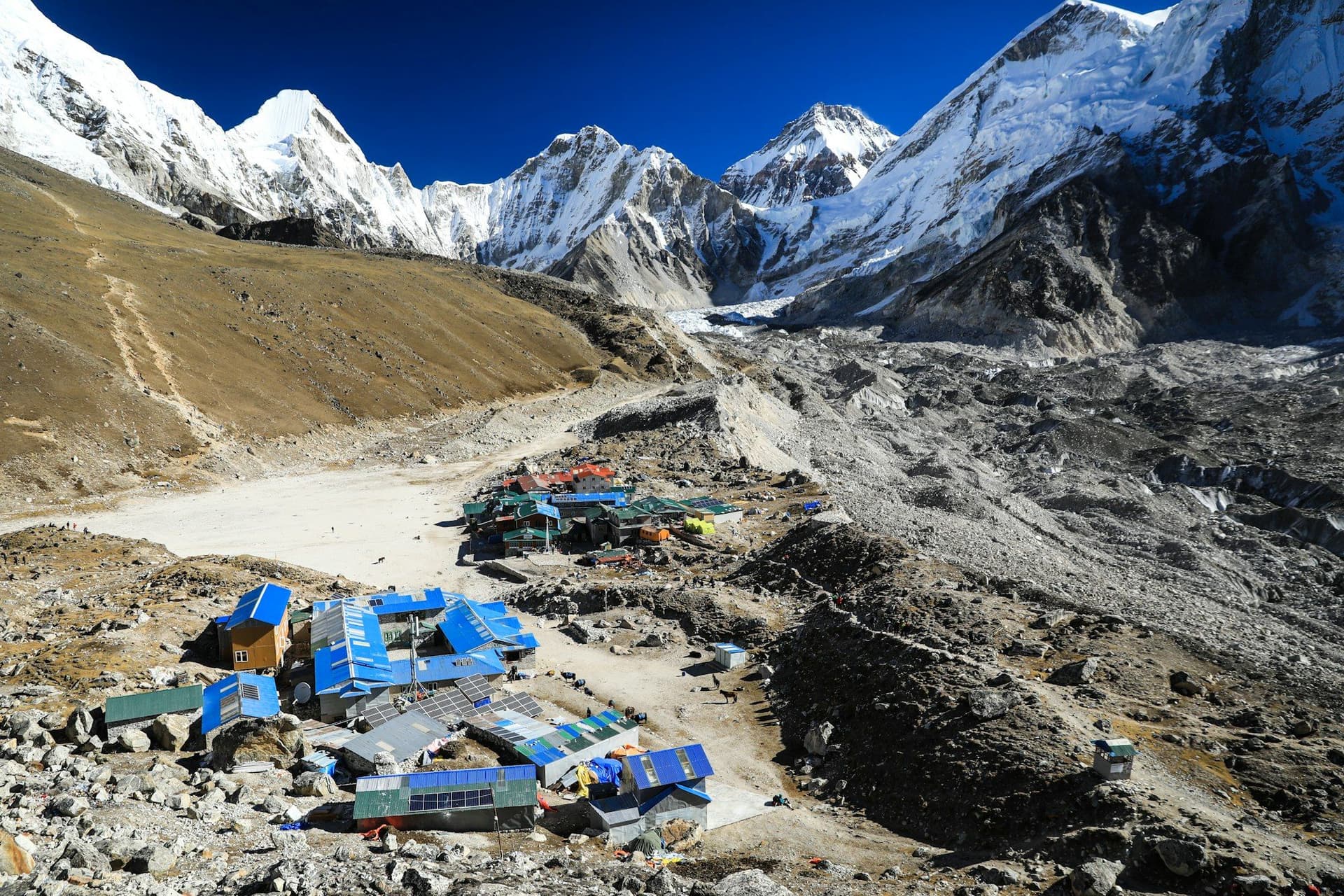
The glacier talks at night. Not metaphorically — the Khumbu is a river of ice moving about a metre a day, and at Lobuche, half a kilometre from its lateral moraine, you hear it working. A crack, then a long settling groan, then nothing for twenty minutes.
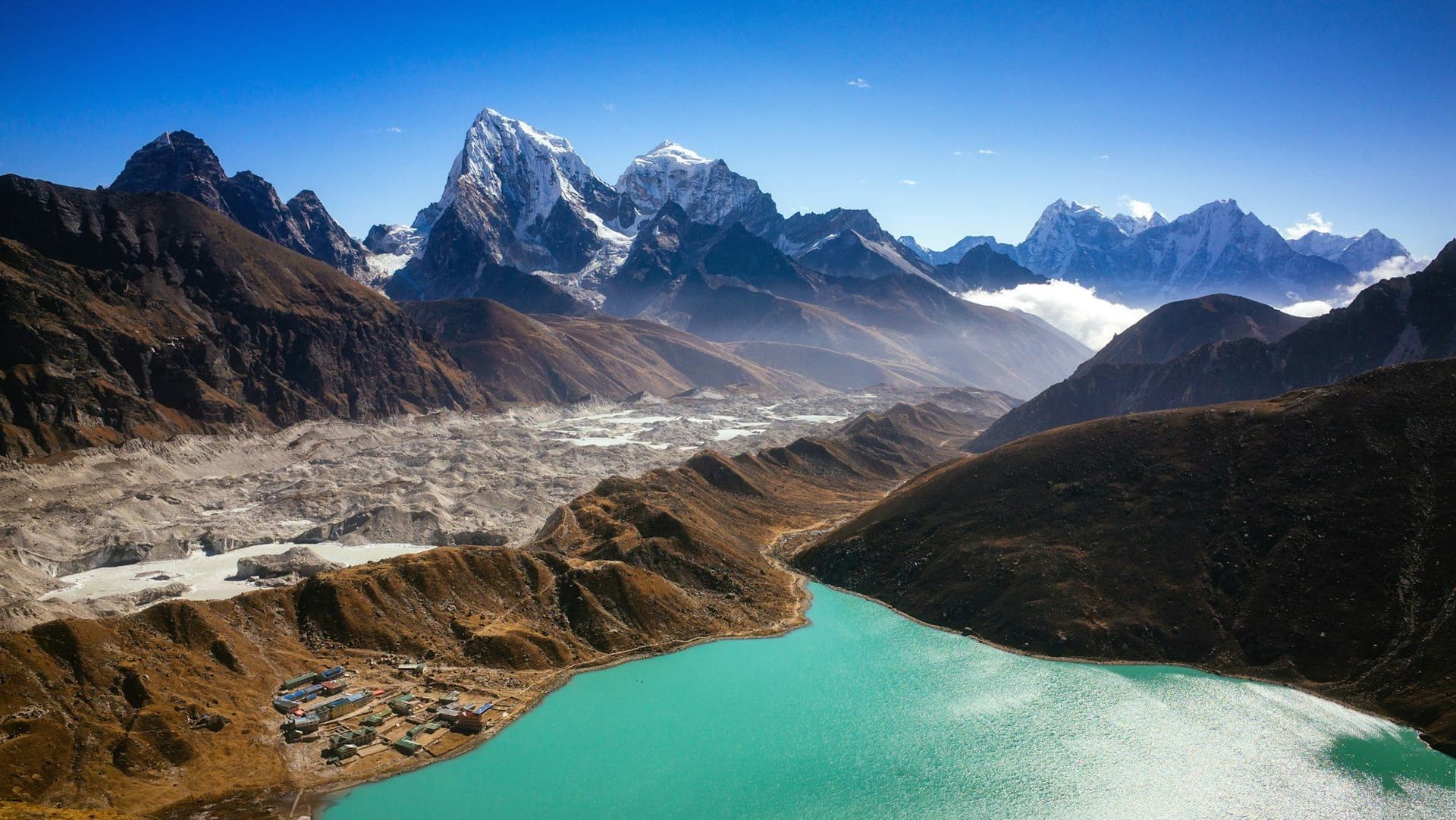
By the eleventh day I had stopped noticing the mountains, which sounds like a failure and was not. Ama Dablam had been extraordinary on day five and was still extraordinary; I had simply run out of the part of the brain that registers extraordinary things and moved into the part that counts breaths on a hill.
Rhythm
This is what nobody tells you about a two-week trek: it becomes work, and the work becomes the point. Wake at six in a room at −6 °C. Put on the clothes you slept next to so they are not frozen. Eat porridge. Walk four hours. Eat dal bhat. Walk three hours. Drink tea until your fingers work. Sleep at eight.
Repeat that eleven times and something settles. The pack stops being an imposition. The altitude becomes a fact to be managed rather than a threat. You develop opinions about lodges, about the correct ratio of chilli to lentil, about which of the four available biscuits is best.
Thukla
There is a low pass above the lodges at Thukla, a two-hundred-metre climb of loose stone that everyone finds hard because it comes after four flat kilometres.
At the top there are cairns. Dozens of them, in rows, with plaques and prayer flags: Sherpas and climbers who died on Everest, going back sixty years. Scott Fischer's is there. Babu Chiri Sherpa's is there. The names go on for a long time.
It is the only place on the trail where the walking stops entirely. People arrive breathing hard, read the plaques, and then stand there in the wind not saying much.
After
Three weeks later, back at sea level, what I remembered was not Base Camp. It was the sound of the glacier at two in the morning, and the specific pleasure of taking boots off at the end of a nine-hour day, and a woman at Pheriche who refilled my thermos twice without being asked and refused to charge for the second.
Photographs
From the road
About the author
Maya Thapa
Senior trekking writer
Maya has walked more than 4,000 kilometres of Nepal's trail network, from the teahouse highways of the Khumbu to the restricted valleys along the Tibetan border. She writes the route guides and day-by-day itineraries, and returns to most trails every second season to re-check lodge availability, water points and trail reroutes after monsoon damage.
Writes about: Nepal trekking · High-altitude routes · Teahouse logistics