Overview
Indra Jatra is the largest street festival in Kathmandu and among the oldest still running in the form it has. It lasts eight days in September, it takes over the old city entirely, and it is the reason to be in Nepal in a month most visitors avoid for the tail of the monsoon.
What happens
It opens with the yosin — a ceremonial pine pole, cut in the forest and carried in, hauled upright by hand in Durbar Square. At the same moment the screen comes off Sweta Bhairav, a huge gilded mask displayed publicly on these days alone, with rice beer running from its mouth into the crowd.
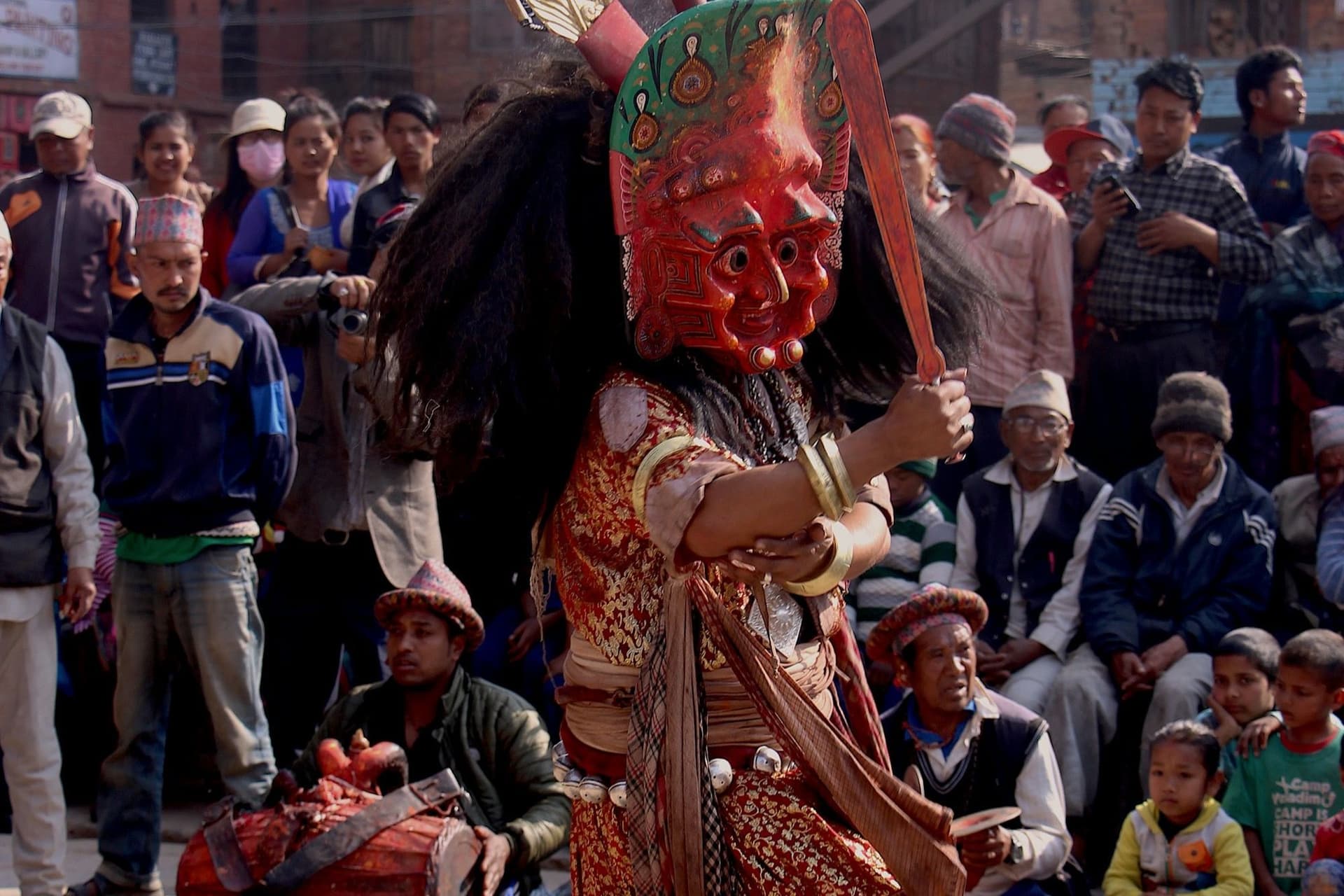
Then three nights of Kumari Jatra: the living goddess drawn through the city on a chariot, with Ganesh and Bhairav in two more, taking a different route through the old quarters each night. Masked lakhey dancers work the procession, and the crowd moves with it.
The festival closes when the pole comes down.
Why the dates move
It follows the lunar calendar and lands somewhere in the first half of September, confirmed only a few months ahead. This tour has one departure a year and it is announced late. Book flights you can change.
What it is like to be in
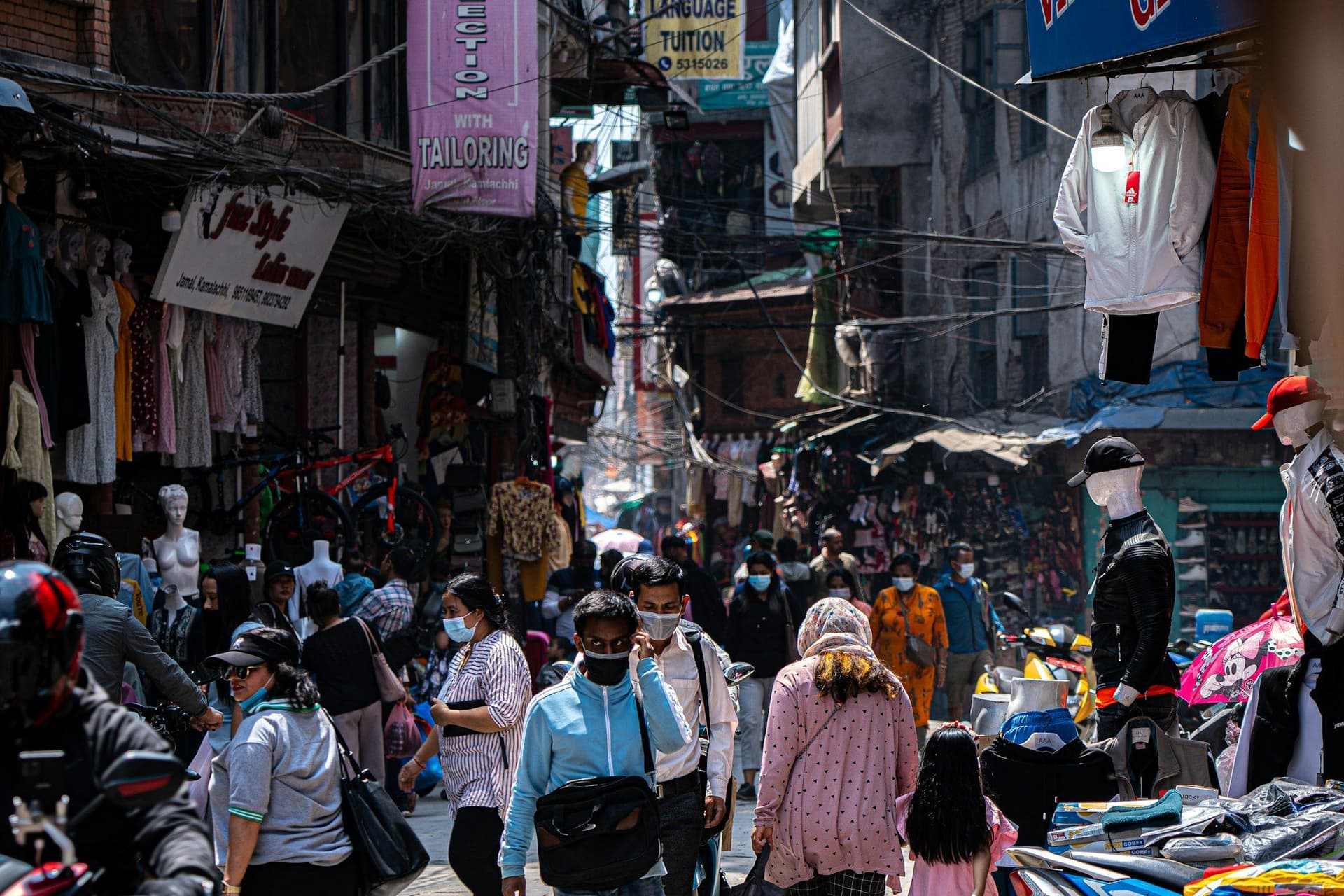
Crowded — genuinely, tens of thousands of people in medieval lanes. We hold reserved standing positions and the group stays together. It is not a festival for small children, and it is difficult for anyone with mobility problems.
It is also, for anyone interested in living religion rather than preserved architecture, the single most extraordinary week in the Nepali calendar.
The quieter days
Between chariot nights, mornings go to Patan, Bhaktapur and Bungamati — the woodcarving village south of the city and the winter home of the Machhindranath deity, a useful counterpoint to the noise.
Best season
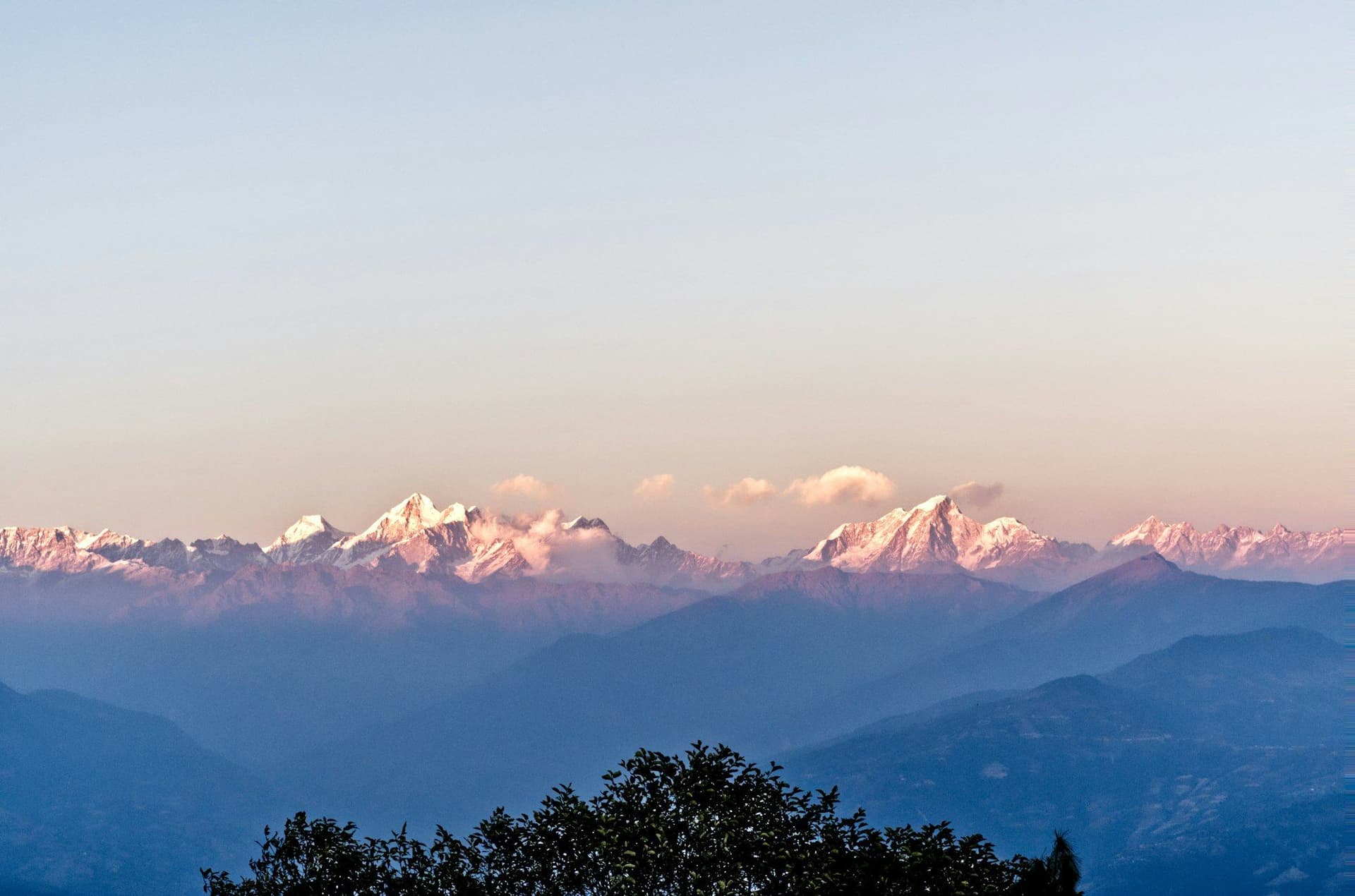
September, by definition. The monsoon is ending, the valley is green, and the air has not yet cleared to its autumn best — a trade most people make gladly.
Highlights
- The yosin pole raised in Durbar Square
- The Kumari's chariot, three nights running
- Sweta Bhairav's mask, unveiled once a year
- Lakhey dancing through the crowd
- Bungamati and the Machhindranath connection
Day by day
The full 8 days
Where you are, what you do, how you travel and where you sleep — each day a structured record rather than a paragraph.
- Day 1
Arrive Kathmandu
Kathmandu
- Settle in and an evening orientation walk of the old city
- Sleep
- Hotel, Kathmandu
- Meals
- Dinner
- Time
- Afternoon
- Day 2
The squares before the crowds
Kathmandu
- Kathmandu Durbar Square and the Kumari Ghar
- Briefing on what happens over the coming week and why
- Sleep
- Hotel, Kathmandu
- Meals
- Breakfast
- Time
- 5 hours
- Day 3
Yosin — the pole-raising
Kathmandu Durbar Square
- The ceremonial pine pole hauled upright by hand
- Sweta Bhairav unveiled
- Evening dance groups begin
- Sleep
- Hotel, Kathmandu
- Meals
- Breakfast
- Time
- 7 hours
This is the opening day and the square fills early. We are in position well before the pole goes up.
- Day 4
Kumari Jatra — first chariot night
Old Kathmandu
- The Kumari, Ganesh and Bhairav chariots pulled through the upper city
- Lakhey and other masked dances in the procession
- Sleep
- Hotel, Kathmandu
- Meals
- Breakfast
- Time
- 8 hours
- Day 5
Patan, and the second chariot night
Patan and Kathmandu
- Patan Durbar Square and the museum in the morning
- Second chariot night through the lower city
- Transport
- Vehicle to Patan
- Sleep
- Hotel, Kathmandu
- Meals
- Breakfast
- Time
- 10 hours
- Day 6
Bungamati and the third chariot night
Bungamati and Kathmandu
- Bungamati, the Machhindranath village
- Woodcarving workshops
- Final chariot night
- Transport
- Vehicle, 40 minutes
- Sleep
- Hotel, Kathmandu
- Meals
- Breakfast
- Time
- 10 hours
- Day 7
Bhaktapur and the pole lowering
Bhaktapur and Kathmandu
- Bhaktapur Durbar Square, Pottery Square, Nyatapola
- Return for the lowering of the yosin, which closes the festival
- Transport
- Vehicle, 40 minutes each way
- Sleep
- Hotel, Kathmandu
- Meals
- Breakfast
- Time
- 9 hours
- Day 8
Departure
Kathmandu
- Airport transfer
- Meals
- Breakfast
Map
Where this tour goes
Price
What $750–$1,500 covers
Seven nights with breakfast, guide and all entry fees; central old-city hotels at the higher rate
Included
- Cultural historian guide for all festival days
- Seven nights in the old city with breakfast
- Reserved standing positions for the chariot nights
- Day excursions to Patan, Bhaktapur and Bungamati
- All monument entry fees
Not included
- International flights
- Lunches and dinners
- Travel insurance
Frequently asked questions
When is Indra Jatra?
What is the festival actually about?
Who is the Kumari?
How crowded is it, honestly?
Can you photograph it?
About the author
Maya Thapa
Senior trekking writer
Maya has walked more than 4,000 kilometres of Nepal's trail network, from the teahouse highways of the Khumbu to the restricted valleys along the Tibetan border. She writes the route guides and day-by-day itineraries, and returns to most trails every second season to re-check lodge availability, water points and trail reroutes after monsoon damage.
Writes about: Nepal trekking · High-altitude routes · Teahouse logistics