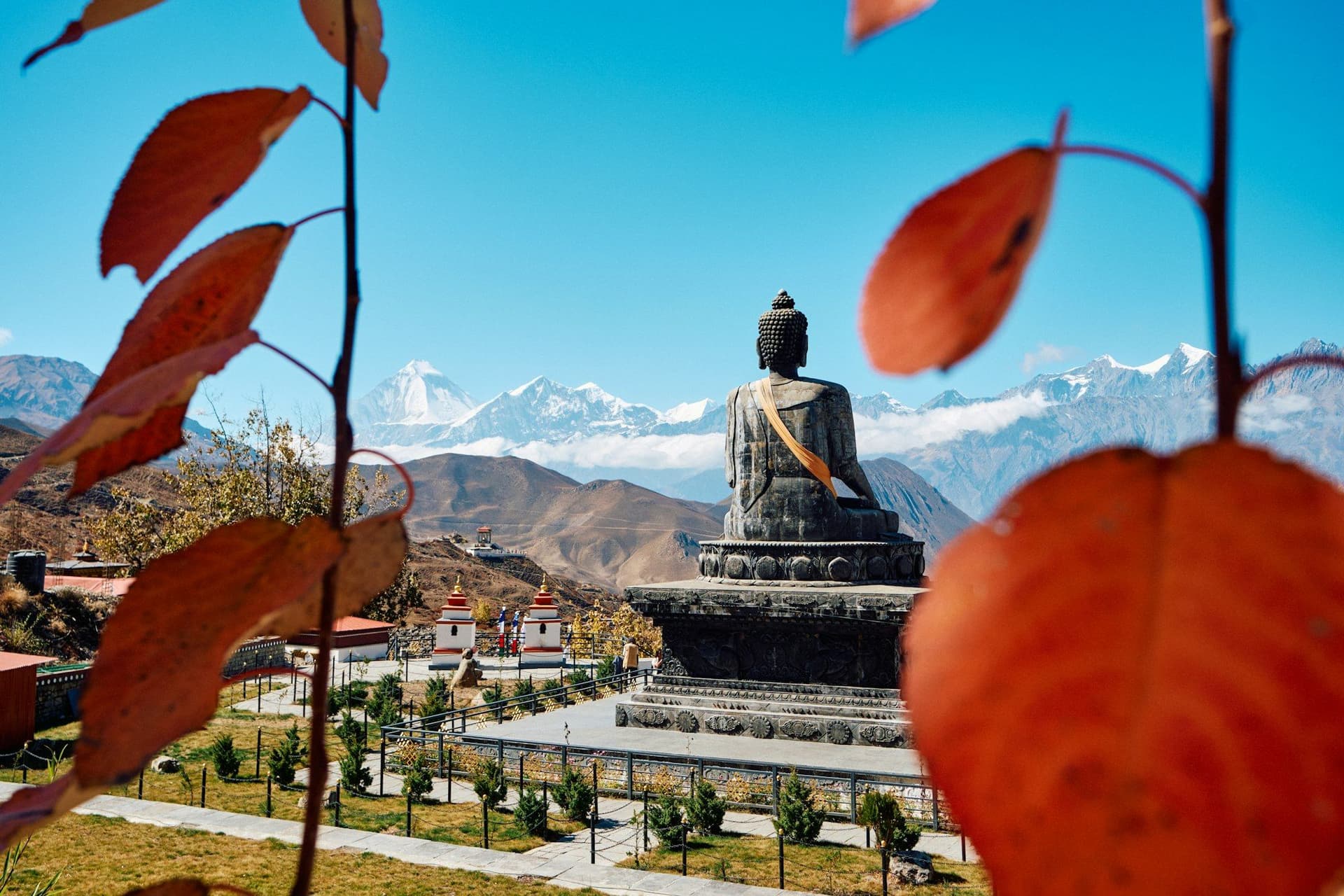
Overview
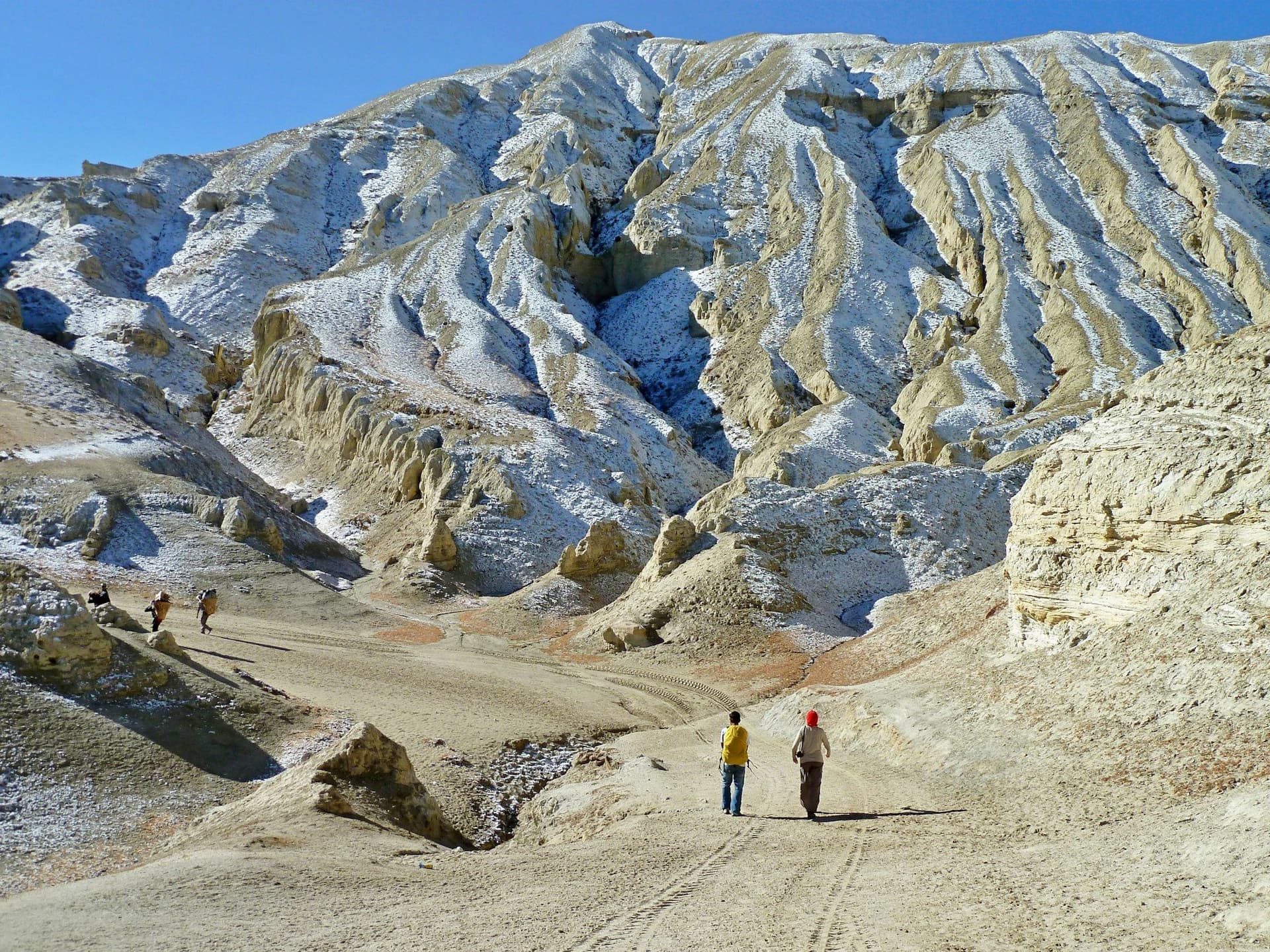
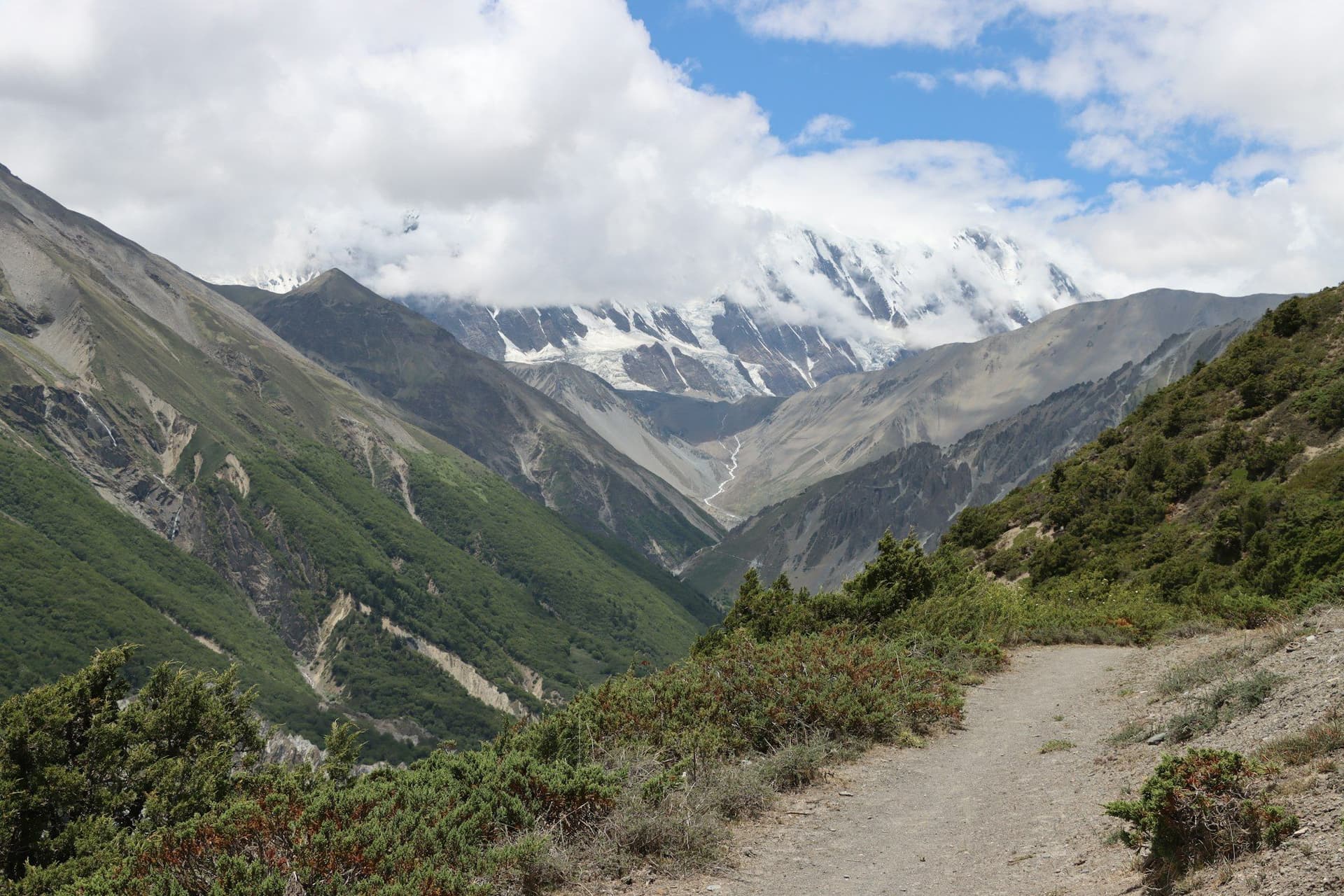
Muktinath sits at 3,710 metres in the Mustang district, in the rain shadow north of Annapurna, at the head of the world's deepest gorge. The name means "place of liberation", and it is one of a small number of sites that Hindus and Tibetan Buddhists hold sacred in the same terms and at the same time.
For Hindus it is one of the eight self-manifested shrines of Vishnu. For Buddhists it is Chumig Gyatsa, one of the twenty-four tantric places. The pagoda temple houses a Vishnu murti and is attended by a Buddhist nun.
What is there
Behind the main temple, 108 bronze spouts shaped as cow heads pour glacial water in a semicircle. Pilgrims pass beneath all of them and then bathe in the two Mukti Kunda pools. At 3,710 metres this is a short and serious business.
Below the temple, Jwala Mai shelters a natural gas flame burning over a spring — fire on water, which is the specific reason for the site's standing.
The riverbed below is the source of shaligram, black ammonite fossils regarded as aniconic forms of Vishnu and found nowhere else.
Getting there
Fly Pokhara to Jomsom — twenty minutes, morning only, and cancelled regularly for wind — then jeep for two hours. Or drive the whole way in two long days via Beni and Tatopani, which is cheaper and much more reliable.
Either way you arrive at 3,710 m the same day you leave Pokhara at 822 m. That is a very fast ascent, and the rest of the afternoon should be spent doing nothing.
Kagbeni
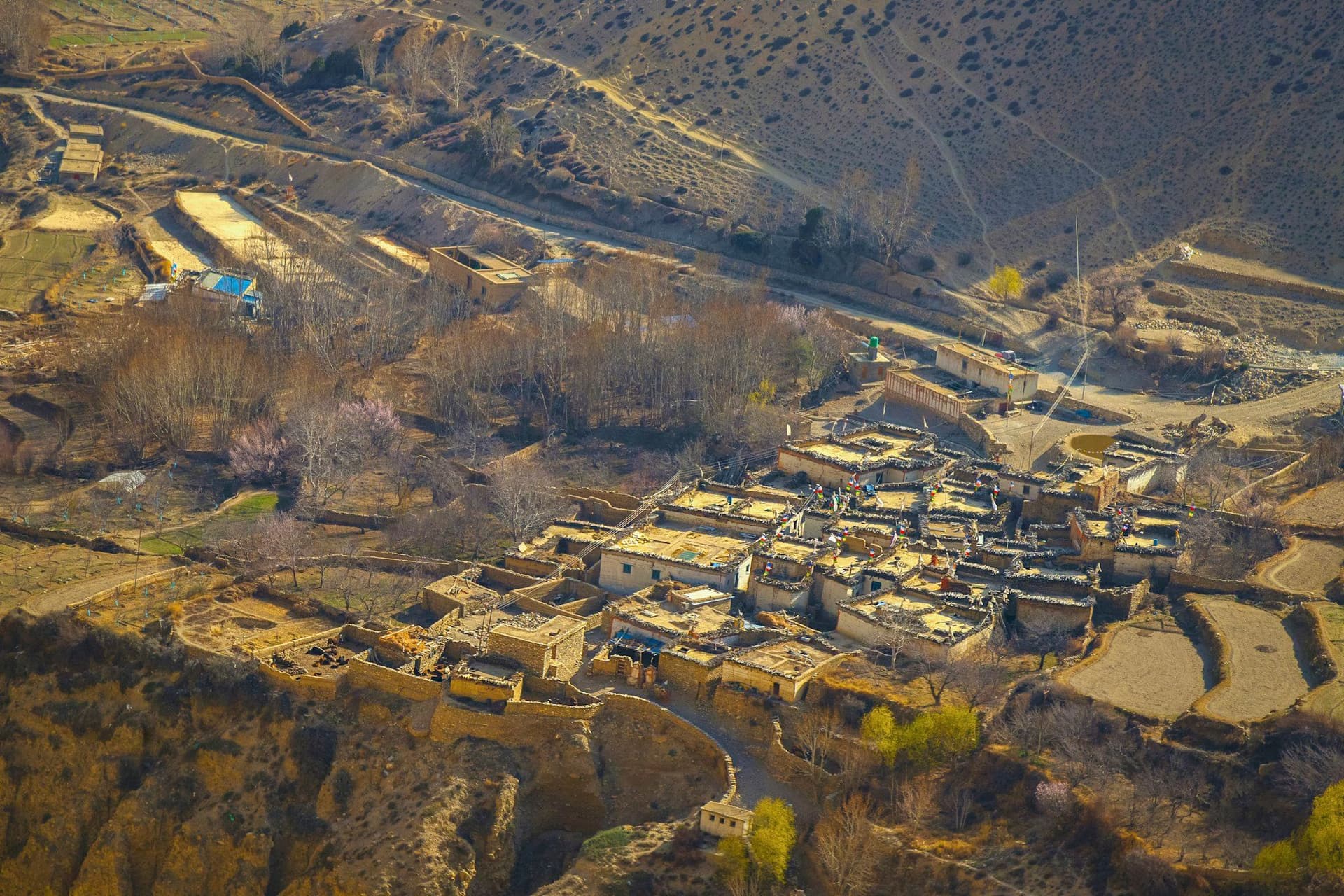
A night in Kagbeni on the way down is worth the detour. It is a walled medieval village of mud-brick alleys at the confluence of two rivers, with a red gompa above it and the Upper Mustang checkpoint at its northern edge — the point beyond which you need a USD 500 permit.
Best season
March to June and September to November. Unusually, the summer months work here too: Mustang sits in the Annapurna rain shadow and stays dry when the rest of Nepal is under monsoon. Winter is cold and the passes above can close.
Highlights
- The 108 water spouts and the Mukti Kunda pools
- Jwala Mai, the eternal flame burning over a spring
- Kagbeni, on the edge of restricted Upper Mustang
- The Kali Gandaki gorge, deepest in the world
- Shaligram fossils in the riverbed
Day by day
The full 5 days
Where you are, what you do, how you travel and where you sleep — each day a structured record rather than a paragraph.
- Day 1
Arrive Pokhara
Pokhara
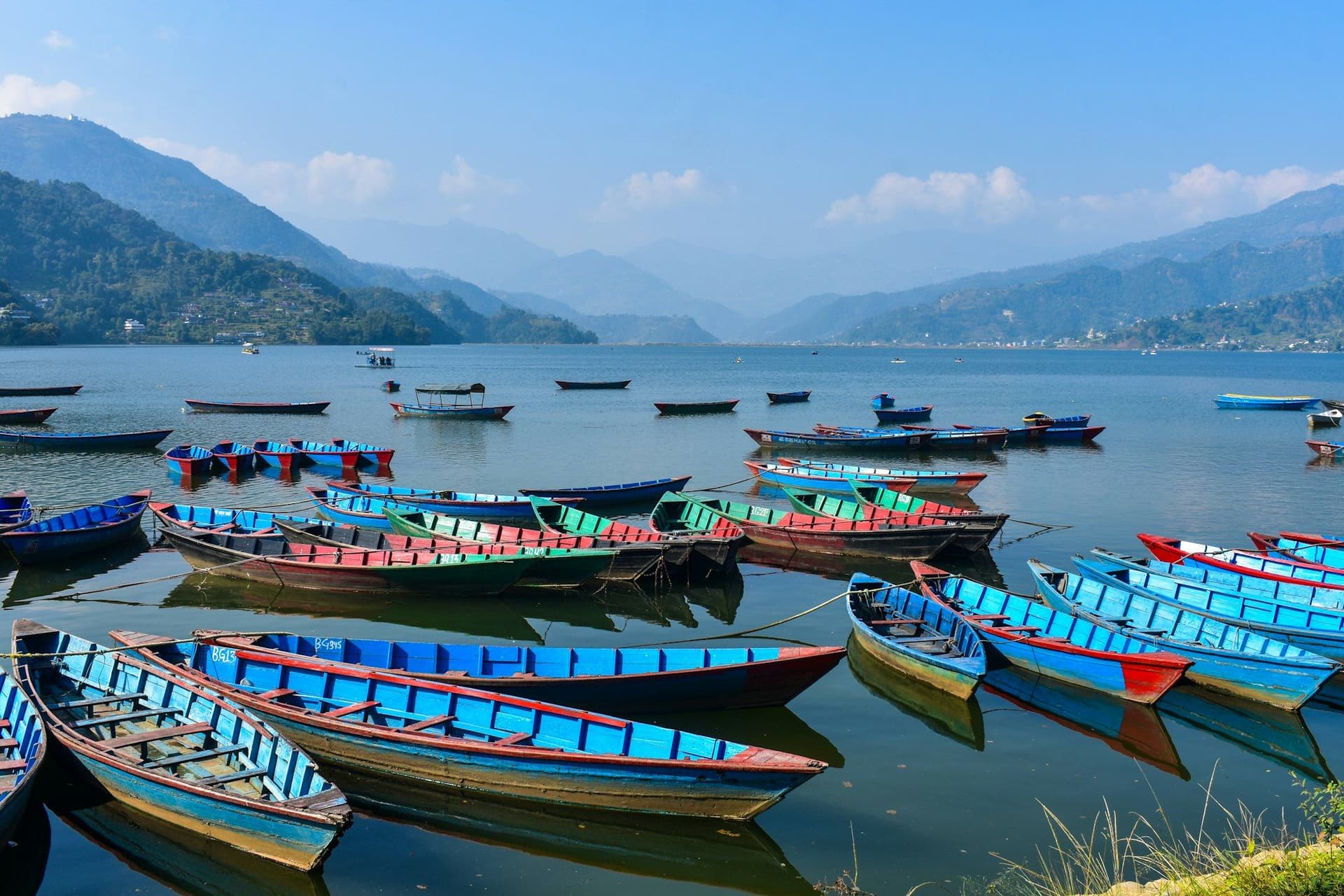
- Phewa Lake and the Barahi temple on its island
- Evening briefing
- Sleep
- Hotel, Pokhara
- Meals
- Breakfast
- Time
- Afternoon
- Day 2
Pokhara to Jomsom, on to Muktinath
Jomsom and Muktinath
- Morning flight to Jomsom, 20 minutes
- Jeep up the Kali Gandaki to Muktinath
- Afternoon at rest to acclimatise
- Transport
- Flight and jeep
- Sleep
- Guesthouse, Muktinath (3,710 m)
- Meals
- Breakfast
- Time
- 4 hours
Muktinath is at 3,710 m and you will have been at 822 m that morning. Walk slowly, drink more than you want to, and leave the temple visit for the following dawn.
- Day 3
Muktinath temple, descend to Kagbeni
Muktinath and Kagbeni
- Dawn darshan at the Vishnu temple
- The 108 spouts and the two Mukti Kunda pools
- Jwala Mai and the eternal flame
- Afternoon in Kagbeni's old town
- Transport
- Jeep
- Sleep
- Guesthouse, Kagbeni
- Meals
- Breakfast
- Time
- 6 hours
- Day 4
Kagbeni to Jomsom and Pokhara
Marpha and Pokhara
- Marpha village and its apple orchards
- Flight Jomsom to Pokhara
- Afternoon free
- Transport
- Jeep and flight
- Sleep
- Hotel, Pokhara
- Meals
- Breakfast
- Time
- 5 hours
- Day 5
Departure
Pokhara
- Sarangkot sunrise, optional
- Onward travel
- Meals
- Breakfast
Map
Where this tour goes
Price
What $450–$900 covers
Lower figure travels by road throughout; upper includes both Jomsom flights
Included
- Pokhara–Jomsom flights or private jeep, as booked
- Four nights' accommodation with breakfast
- ACAP permit and TIMS card
- Guide throughout
Not included
- Lunches and dinners
- Puja materials and temple donations
- Travel insurance
Frequently asked questions
Why is Muktinath sacred to two religions?
What is the eternal flame?
Do the 108 spouts have to be bathed in?
Is the altitude a problem?
Can you drive the whole way?
About the author
Maya Thapa
Senior trekking writer
Maya has walked more than 4,000 kilometres of Nepal's trail network, from the teahouse highways of the Khumbu to the restricted valleys along the Tibetan border. She writes the route guides and day-by-day itineraries, and returns to most trails every second season to re-check lodge availability, water points and trail reroutes after monsoon damage.
Writes about: Nepal trekking · High-altitude routes · Teahouse logistics